
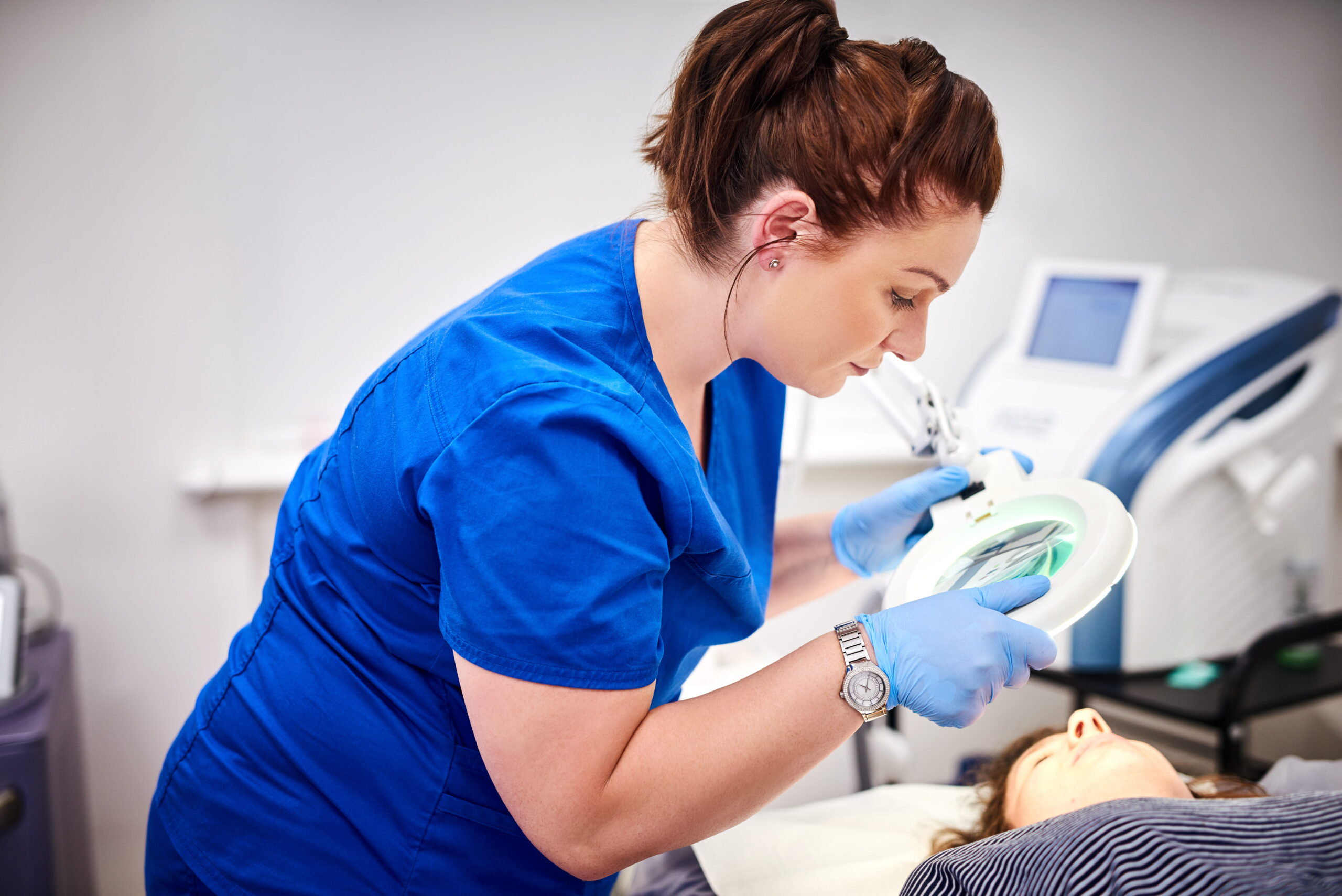
Aesthetic nursing is one of the fastest-growing specialties in modern medicine. It requires clinical precision, deep knowledge of pharmacology, and an unwavering commitment to patient safety. For registered nurses wondering, “How do you become an aesthetic nurse?” understanding the core requirements of this specialty is essential. Working professionals looking to elevate their practice and leadership capabilities can build the foundation they need with an accredited RN to BSN online program.
What Is an Aesthetic Nurse?
An aesthetic nurse is a registered nurse (RN) who provides nonsurgical cosmetic and dermatological treatments as a member of a physician-led clinical team. Professional certification focuses on four core sub-specialties: plastic/aesthetic surgery, dermatology, facial plastic surgery, and ophthalmology. The choice of subspecialty dictates where the nurse will go for qualifying clinical hours to earn certification.
There is also a difference between a nurse esthetician and a licensed esthetician. A licensed esthetician completes a state-approved esthetics program that focuses on skin care, relaxation facials, and superficial treatments.
For those researching how to become a nurse esthetician, the path involves first earning a registered nurse license. A nurse esthetician is a licensed RN with advanced clinical training. The RN has the pharmacological knowledge and licensure necessary to administer prescription medications, provide deep medical-grade procedures, and identify and manage complex complications.
What Does an Aesthetic Nurse Do?
The daily responsibilities of an aesthetic nurse involve comprehensive patient management. Core duties include initial assessments, taking and reviewing detailed medical histories, securing informed consent, delivering treatments following a physician’s orders, and managing post-procedure follow-up care.
The official certification requirements fall under three generalized categories of practice:
- Injectables. Administering neuromodulators, specifically, botulinum toxin products like BOTOX, alongside soft tissue dermal fillers.
- Light and energy-based therapies. Operating lasers, intense pulsed light (IPL) devices, and radiofrequency equipment.
- Clinical skin care. Executing advanced medical-grade chemical peels, microneedling, and barrier restoration protocols.
According to data compiled by the American Society of Plastic Surgeons (ASPS), minimally invasive procedures continue to dominate in this market, accounting for millions of treatments nationwide. Among these, neuromodulators led every adult age group as the most frequently requested minimally invasive aesthetic procedure. For detailed statistical breakdowns, you can review the ASPS Plastic Surgery Statistics.
How to Become an Aesthetic Nurse: Step-by-Step
The path into this specialized field requires a deliberate progression from foundational education to specialized certification.
Step 1: Earn Your Nursing Degree
Candidates must first complete an accredited nursing education program, earning either an Associate Degree in Nursing (ADN) or a Bachelor of Science in Nursing (BSN). While both choices can lead to licensure, the BSN better positions candidates in the competitive employment market for outpatient clinics and hospital-affiliated med spas.
Step 2: Pass the NCLEX-RN and Obtain Licensure
Graduates must pass the National Council Licensure Examination for Registered Nurses (NCLEX-RN) and obtain active state licensure in the state where they want to practice. The RN license is a necessary credential for a nurse to deliver medical care.
Step 3: Build Clinical Experience
Next, nurses must gain experience in related acute or procedural environments such as dermatology, plastic surgery, or perioperative care. This background builds critical understanding of complication recognition, sterile technique, and rapid medical intervention.
Step 4: Complete Specialized Aesthetic Training
Targeted post-licensure training occurs through manufacturer-led education, cadaver labs, live-model injection courses, laser safety certifications, and supervised hands-on learning sessions. Essential competency requirements include mastering facial anatomy, understanding product properties, and managing vascular complications. The aesthetic training market is largely unregulated and quality varies widely, so nurse specialists must thoroughly vet educational providers.
Step 5: Secure a Position in a Core Specialty Practice
Because advanced certification requires practicing alongside or under the supervision of a board-certified core specialty physician, these environments are a mandatory credentialing prerequisite.
Step 6: Pursue CANS Certification
Finally, experienced professionals can pursue the Certified Aesthetic Nurse Specialist (CANS) credential, governed by the Plastic Surgical Nursing Certification Board (PSNCB). Established in 1989 and affiliated with the International Society of Plastic and Aesthetic Nurses (ISPAN), CANS represents the gold standard of professional validation. Review the official ISPAN Certification Page and download the CANS Application Guide to verify current submission protocols.
CANS eligibility requires meeting four strict criteria:
- Holding an active, unencumbered RN license in the United States, its territories, or Canada.
- Securing a formal endorsement from a board-certified core specialty physician.
- Accumulating at least two years of RN experience within the recognized core specialties during the three years preceding application.
- Completing a minimum of 1,000 practice hours in those core specialties within the last two years.
The certification exam consists of approximately 150 multiple-choice questions heavily weighted toward injectables and procedural safety. Credentialing lasts for three years and is maintained through re-examination or continuing education (CE) credits.
How Long Does It Take to Become an Aesthetic Nurse?
The path to becoming a fully credentialed aesthetic nurse typically takes four to seven years.
- Years 1–4: Complete a nursing degree (ADN or BSN) and pass the NCLEX-RN.
- Years 3–5: Build foundational clinical experience in medical-surgical, dermatology, or plastic surgery settings.
- Years 5–6: Complete specialized cosmetic training courses and secure employment within a core specialty practice.
- Years 6–7+: Accumulate the required clinical practice hours and successfully pass the CANS examination.
Registered nurses with active licensure and clinical experience can transition directly into specialized training and practice settings.
Understanding Scope of Practice in Aesthetic Nursing
In cosmetic medicine, advanced credentials never override state laws or the fundamental rules of professional licensure.
- Cosmetic nurse certification is voluntary and does not grant an independent right to practice. It validates the nurse’s expertise but does not replace state nursing regulations or the legal boundaries of professional licensure.
- Practice relies on physician supervision and requires a valid, patient-specific medical order or established clinical protocol before any cosmetic treatment.
- State-by-state regulations vary significantly regarding physician presence on-site and who is legally authorized to perform initial patient examinations.
- Practice independence is strictly limited because dermal fillers are FDA-regulated medical devices and neuromodulators are controlled prescription drugs; review regulatory classifications directly in the FDA Dermal Fillers Guide.
- Practitioners must thoroughly verify state board rules and delegation laws before accepting any clinical role in an aesthetic practice.
How a BSN Strengthens Your Aesthetic Nursing Career
Long-term success and clinical leadership in aesthetic medicine rely on advanced nursing frameworks you gain by earning your BSN degree.
- Clinical excellence in aesthetics relies more on advanced judgment than basic nursing technique, especially when identifying early signs of complications such as tissue necrosis.
- Earning a Bachelor of Science in Nursing provides crucial professional competencies for daily practice, including advanced pharmacology, comprehensive health assessment, evidence-based care models, patient safety frameworks, clinical ethics, and interprofessional communication.
- Outpatient med spas and physician-led cosmetic practices increasingly prefer baccalaureate education as a baseline hiring requirement. A BSN also establishes the academic prerequisite for graduate study and Nurse Practitioner (NP) licensure.
- The U.S. Bureau of Labor Statistics (BLS) does not track specialty nurse markets separately. It does report a national median annual wage of $93,600 for registered nurses, with overall employment projected to grow 5% from 2024 to 2034. Review comprehensive employment data in the BLS Occupational Outlook Handbook. Candidates should approach inflated, unverified, advertised specialty salary figures with caution and only rely on verified labor statistics.
Frequently Asked Questions
Do you need a BSN to be an aesthetic nurse?
No, an associate degree in nursing provides the initial education required to sit for the NCLEX-RN and obtain licensure. However, employers in competitive aesthetic dermatology, a medical spa and plastic surgery practices tend to favor BSNs for their advanced analytical and leadership training.
How long does it take to become an aesthetic nurse?
You can expect to spend four to seven years developing this specialty. That path includes undergraduate education, general nursing experience, specialized aesthetic training, and the accumulation of required hours for advanced board certification.
Can nurses inject Botox without a doctor?
No, registered nurses cannot provide BOTOX injections without physician orders, whether in a dermatology practice or medical spa.
Elevate Your Nursing Career With Nevada State University
Aesthetic nursing is a career path that requires rigorous clinical accountability, advanced pharmacological knowledge, and unwavering dedication to patient safety. Whether you are looking to enhance your technical skill set or want to earn a leadership position within a premier practice, expanding your educational foundation is the most effective way to go.
Nevada State University offers a fully accredited, 100% online RN to BSN online program designed for working professionals. The curriculum can be completed in as few as 12 months at a tuition rate under $11,000, combining academic rigor with exceptional flexibility.
Request more information today to discover how Nevada State University can help you advance your nursing career.
Sources
https://www.plasticsurgery.org/plastic-surgery-statistics
https://www.fda.gov/medical-devices/aesthetic-cosmetic-devices/dermal-fillers-soft-tissue-fillers
https://aaams.net/blog/aesthetic-nurse-practitioner-skills/
https://aaopm.com/blog/how-to-become-aesthetic-nurse/