
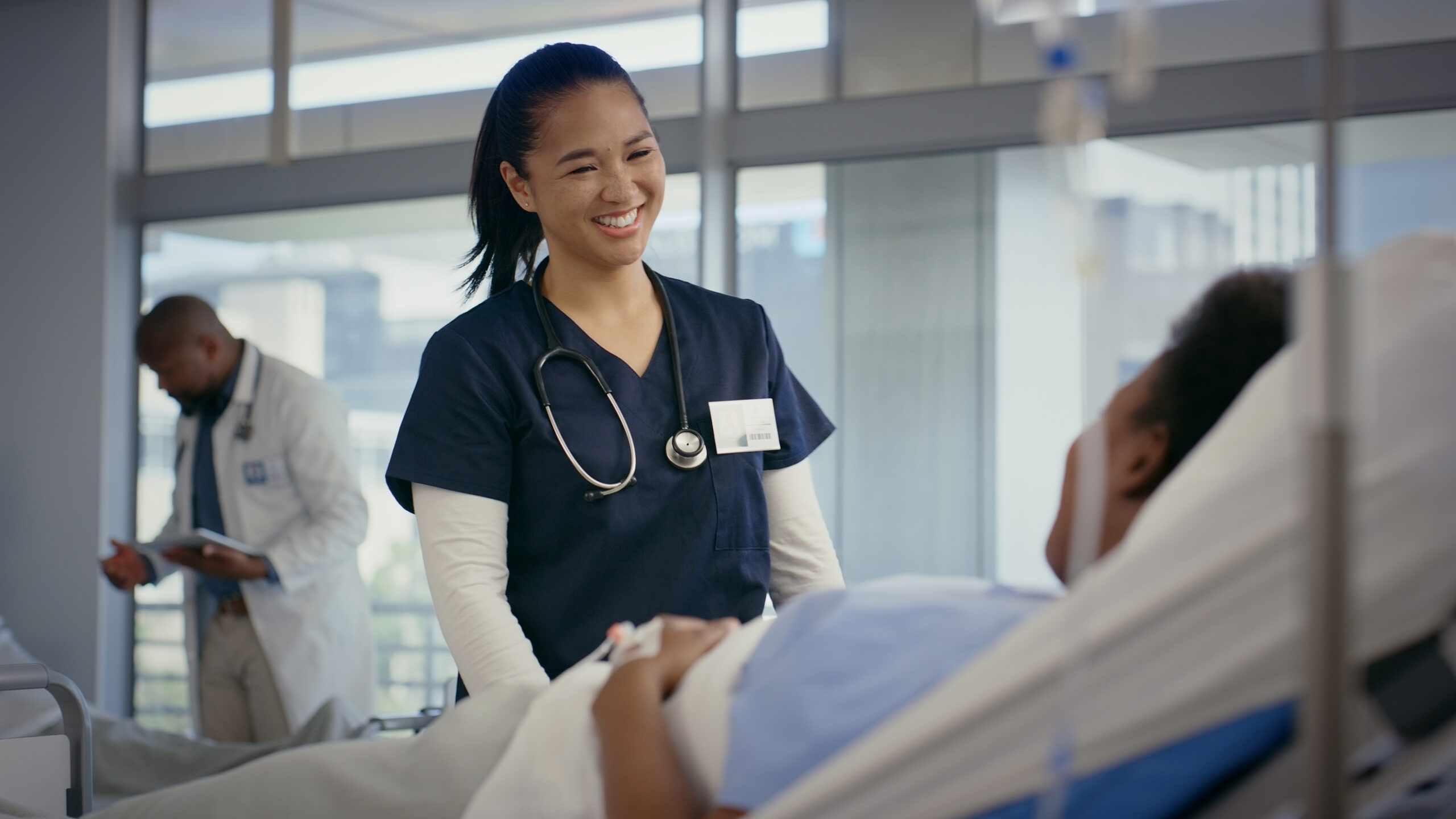
Great nursing calls for compassion, sound judgment, clear communication, resilience, and the ability to stay organized when several needs compete for attention. These qualities are not fixed personality traits but rather abilities nurses can enhance through various avenues. For working registered nurses (RNs) who seek to bolster that skill set while earning a bachelor’s degree, the RN to BSN online program through Nevada State University (NSU) offers a flexible path to advance their education.
What Makes a Good Nurse?
A good nurse combines clinical knowledge with:
- Critical thinking
- Compassion
- Communication
- Attention to detail
- Emotional resilience
- Organization
- Physical stamina
The U.S. Bureau of Labor Statistics (BLS) identifies these among the important qualities registered nurses need to:
- Assess patients.
- Communicate with care teams.
- Deliver treatments accurately.
- Respond to stressful situations.
While some people may enter nursing with natural strengths in certain areas, most of the skills needed to be a nurse grow through coursework, supervised practice, mentorship, and day-to-day experience.
Core Interpersonal Qualities of a Good Nurse
Nurses spend much of their workday interacting with patients, families, and other health professionals. Strong interpersonal nurse qualities help them understand concerns in order to explain care clearly, build trust, and ultimately keep everyone working toward the same goal.
Empathy and Compassion
Empathy is the ability to understand another person’s feelings or perspective, while compassion means exhibiting a desire to respond with care and support. Both contribute to patients feeling heard and respected, which may make it easier for them to ask questions and follow a care plan.
Compassion also needs to be cultivated and protected. Healthy boundaries, reflection, peer support, and recovery time can help nurses remain caring without treating emotional strain as something they simply have to absorb.
Communication
Effective communication in nursing is integral to delivering patient care. Nurses often serve as a communication link among:
- Patients
- Families
- Physicians
- Pharmacists
- Therapists
- Other members of the care team
As such, they need to listen carefully, explain information in understandable terms, document accurately, and raise concerns when something changes.
Cultural Competence
Patients may differ in terms of:
- Language
- Beliefs
- Family roles
- Health practices
- Expectations of care
Cultural competence asks nurses to approach those differences with curiosity and respect while maintaining awareness of their own assumptions. Adapting communication and care to the patient can reduce misunderstandings and support safer, more patient-centered decisions. Read more about why cultural competence matters in nursing.
Teamwork and Collaboration
Patient care relies on coordination. Nurses must:
- Share updates.
- Clarify responsibilities.
- Recognize when another professional needs to be involved.
- Help prevent key details from being lost during handoffs.
One common tool is SBAR, which stands for situation, background, assessment, and recommendation. The Agency for Healthcare Research and Quality describes it as a structured way to communicate important information clearly and concisely.
Clinical and Cognitive Skills Every Nurse Needs
Interpersonal strengths are essential, but nurses also make frequent decisions that affect patient safety. Relevant skills of a nurse include:
Critical Thinking and Clinical Judgment
Nurses continually assess what they see, hear, and measure. Critical thinking helps them:
- Recognize a meaningful change in a patient’s condition.
- Connect it with other information.
- Decide what requires immediate attention.
- Determine when to escalate a concern.
Clinical judgment also matters when prioritizing several patients whose needs differ in urgency and complexity.
Attention to Detail
Small details can carry serious consequences in nursing. Strong nurses build habits that support precision even during busy shifts.
For instance, accurate medication administration depends on confirming the correct:
- Patient
- Drug
- Dose
- Route
- Timing
Meanwhile, careful documentation helps the next clinician understand what happened and what still needs attention.
Adaptability and Problem-Solving
A patient’s status can change quickly, and a care plan that worked earlier may no longer fit. Adaptable nurses:
- Reassess.
- Gather new information.
- Communicate changes.
- Work with the care team to choose the next appropriate step.
Problem-solving is less about having an instant answer and more about staying observant, using available evidence, and responding safely when conditions change.
Personal Qualities That Sustain a Nursing Career
Nursing can be physically and emotionally demanding. Long-term success hinges on not only how a nurse performs during a single shift but also the habits and supports that make it possible to keep providing careful, compassionate care over time.
Emotional Resilience
Nurses encounter scenarios spanning emergencies, grief, uncertainty, conflict, and human suffering. Emotional resilience helps them process difficult experiences and seek support when needed so they can return their attention to the work in front of them.
Crucially, this should not be conflated with ignoring stress. The U.S. Surgeon General’s advisory on health worker burnout describes burnout as a workplace concern with consequences for health workers and the healthcare system, underscoring the need for organizational as well as individual support.
Physical Stamina and Organization
Many nurses spend much of a shift on their feet and may help move or reposition patients. At the same time, they may be tracking details for several patients, such as:
- Medications
- Assessments
- Documentation
- Tests
- Care plans
Physical stamina and organization work together: Nurses need the energy to carry out care and the systems to keep priorities, timing, and records straight.
Commitment to Lifelong Learning
Nursing knowledge does not stop growing after licensure. New evidence, technologies, medications, protocols, and patient needs require nurses to keep learning throughout their careers. Continuing education and professional development alongside degree completion can help nurses reinforce existing skills and prepare for added responsibility. For prospective students wondering what continued nursing education involves, here’s what to expect in a BSN program.
How a BSN Helps Nurses Strengthen These Skills
A Bachelor of Science in Nursing can give registered nurses more structured opportunities to hone abilities and knowledge related to:
- Communication
- Leadership
- Critical thinking
- Evidence-based practice
- Cultural awareness
- Community health
Nevada State University’s RN to BSN online program is 100% online and consists of 36 credits. Full-time students can complete it in about 12 months, and the total program cost is under $11,000. The baccalaureate degree program in nursing at Nevada State University is accredited by the Commission on Collegiate Nursing Education (http://www.ccneaccreditation.org).
For experienced RNs, the RN to BSN curriculum at NSU includes evidence-based education that builds upon bedside knowledge while broadening your view of patients, teams, communities, and healthcare systems.
Take the Next Step in Your Nursing Career
The qualities of a good nurse can be learned and refined throughout a career. Education can help nurses sharpen the skills they already use while preparing for new responsibilities and leadership opportunities. Explore the Nevada State University RN to BSN online program or request more information to take the next step.
Frequently Asked Questions
What are the most important qualities of a good nurse?
Noteworthy qualities include compassion, communication, critical thinking, attention to detail, emotional resilience, organization, physical stamina, adaptability, cultural competence, and teamwork. The exact mix may look different across nursing roles, but each contributes to various facets of safe and effective patient care.
Are nursing skills learned or innate?
Some people naturally feel comfortable communicating, organizing, or supporting others, but nursing skills are largely developed through education and experience. Clinical judgment, communication habits, teamwork, cultural awareness, and resilience can all improve with practice, feedback, and mentorship.
What soft skills do nurses need?
Useful soft skills include empathy, active listening, clear communication, collaboration, adaptability, emotional regulation, time management, and conflict resolution. These skills help nurses work effectively with patients and families as well as interdisciplinary care teams.
How does a BSN improve nursing skills?
Bachelor of Science in Nursing coursework can deepen an RN’s knowledge of evidence-based practice, leadership, communication, community health, cultural awareness, and healthcare systems. These areas can strengthen clinical decision-making while preparing nurses for broader professional responsibilities.
Sources
https://nevadastate.edu/program/rn-bsn/
https://nevadastate.edu/son/rn-bsn/how-hard-is-nursing-school-what-to-expect-in-a-bsn-program/
https://www.bls.gov/ooh/healthcare/registered-nurses.htm
https://www.ahrq.gov/teamstepps-program/curriculum/communication/tools/sbar.html