
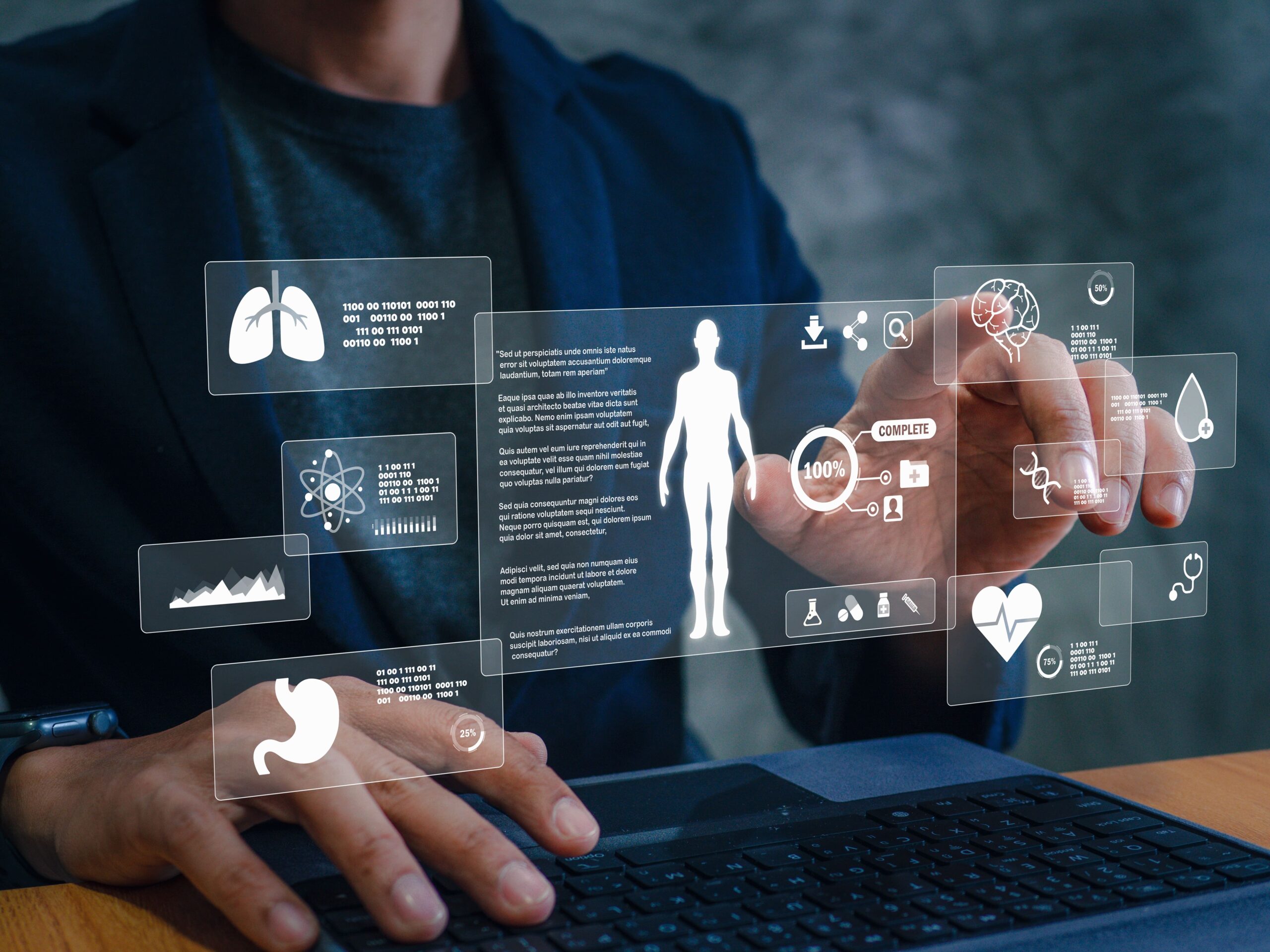
Healthcare technology innovations are reshaping nursing practice in nearly every unit. Advanced tools and intuitive devices enable nurses and other healthcare providers to streamline care, improve patient outcomes, and create a better patient experience. Exploring the latest nursing technology trends will allow you to become more agile and quickly adapt to emerging healthcare technology.
Artificial Intelligence (AI) and Machine Learning (ML) in Healthcare
Both artificial intelligence (AI) and machine learning (ML) technologies are swiftly revolutionizing nearly every industry, and the healthcare industry is no exception. Healthcare administrators, providers, and public health experts all agree — AI and ML are emerging technologies that have the power to streamline operations, reduce administrative burden, and improve precision when caring for patients. However, learning how to use AI and ML technology responsibly is crucial to successfully implementing this new technology.
What is AI and ML?
AI and ML technologies are closely related, but there are distinct differences between the two. According to NASA, artificial intelligence refers to technology and computer systems capable of performing complex tasks that previously had to be completed by humans. On the other hand, machine learning technology is a branch of artificial intelligence that focuses primarily on automating tasks previously only completed by humans.
The Centers for Disease Control (CDC) maintains that AI and ML technologies are critical in the modern healthcare landscape, which relies heavily on evidence-based care for patients. Both AI and ML technologies can process vast amounts of data quickly, allowing healthcare providers and administrators to quickly implement targeted solutions for individual patients and entire populations. For example, AI technology can be used to forecast health trends and monitor disease outbreaks in particular communities.
Telehealth and Remote Patient Monitoring (RPM) in Healthcare
Telehealth healthcare services have been available for decades since the invention of the telephone. However, until recently, telehealth was always viewed as a supplemental service. Thanks to rapidly advancing technology and social shifts that occurred during the global pandemic, telehealth services are widely used by patients of all ages and backgrounds. They have made healthcare more accessible and convenient for millions of people.
Remote patient monitoring (RPM) is a key component of telehealth services, as it enables healthcare providers to monitor patient progress and collaborate more effectively with patients.
What Is Remote Patient Monitoring?
The Department of Health and Human Services defines remote patient monitoring (RPM) as the use of digital healthcare technology to monitor a patient’s health. When used effectively, RPM leads to improved outcomes, as providers can fine-tune treatment plans in real time and increase patient engagement in their healthcare treatment plan.
Technology Trends in Healthcare
The emerging healthcare technology trends will impact every level of healthcare. Nurses preparing for a lifelong career in the field will need to become flexible and agile as they continue to work with rapidly advancing technology, because change will be constant in the years to come. Being able to adapt to new technology quickly will allow you to leverage the best nursing technology trends and improve the level of care that you can provide for your patients.
These are some of the emerging healthcare technology trends changing today’s landscape:
AI-Powered Diagnostics
Artificial intelligence algorithms are being used more frequently to assist healthcare providers in diagnosing conditions like cancer, heart disease, and neurological disorders through medical imaging and predictive analytics. AI-driven diagnostics are improving healthcare accessibility and leading to better outcomes for patients, as these solutions enable providers to diagnose chronic conditions and illnesses faster and earlier than ever before. However, healthcare providers still need to work closely with AI engineers and technology developers to ensure that this technology is used responsibly when diagnosing patients.
Telemedicine and Telehealth
The continued expansion of telehealth services allows patients to receive medical consultations remotely, with improved virtual care platforms integrating AI for enhanced diagnosis and treatment. Telehealth can be broken down into four core functions:
- Live Video — Live video enables patients to connect directly with their providers in real time, allowing them to benefit from remote visits that mimic the in-person office experience.
- Store-and-Forward — Used daily by millions of healthcare providers around the world, store-and-forward services refer to the electronic transfer of health information. For example, a provider may forward diagnostic images to a specialist for review.
- Remote Patient Monitoring — RPM is used widely in healthcare to track patients’ progress in real-time and adjust their treatment plans accordingly.
- Mobile Health (mHealth) — These mobile applications improve health communication between providers and patients alike.
Wearable Health Devices
Advanced wearable devices, such as smartwatches and health trackers, are capable of continuously monitoring vital signs like heart rate, blood pressure, and blood glucose levels, providing real-time data for better patient management. Wearable health devices are quickly evolving to provide nurses and other members of the healthcare team with more detailed data. Moreover, these devices can now be embedded in clothing, making them more comfortable and convenient to use.
Robotic Surgery
Robotics and AI-driven surgical tools are enabling more precise, minimally invasive procedures, ultimately reducing recovery times and improving patient outcomes. The number of robotic surgeries performed each year has increased significantly over the course of the past decade, particularly in gynecological, cardiothoracic, and colorectal procedures. That said, this advanced technology is not replacing the need for surgeons. Rather, it is simply allowing surgeons to perform more complex surgeries in a shorter amount of time and with better outcomes.
Virtual Reality (VR) for Pain Management
VR technology is being used in new and creative ways in the healthcare field. Many providers are finding that this advanced technology can provide immersive, non-pharmacological pain relief by distracting patients and helping them manage anxiety and pain during procedures or recovery.
Blockchain for Health Data Security
Blockchain technology is enhancing data security and privacy by creating decentralized and tamper-proof records of patient information, reducing the risk of data breaches. Blockchain technology could become a key part of the industry’s infrastructure, as it allows healthcare facilities to safely store patient data while staying in compliance with HIPAA laws and industry regulations.
3D Printing in Healthcare
Currently, 3D printing technology is being used in the healthcare industry for creating customized prosthetics, surgical tools and even patient-specific implants, allowing for more precise and personalized care. The number of hospitals with 3D printing facilities has increased significantly in recent years, allowing hospitals to increase the production speed of medical products while reducing healthcare costs.
Gene Editing and CRISPR Technology
Advances in gene-editing technologies, like CRISPR, enable the potential for curing genetic diseases and tailoring treatments based on individual genetic profiles. A child recently became the first patient in the world to receive gene-editing treatment through CRISPR successfully. The infant received treatment after being diagnosed with carbamoyl phosphate synthetase 1 deficiency. Since receiving the personalized gene-editing treatment, the child is thriving, highlighting the transformative power of these advanced treatments.
Artificial Intelligence in Drug Development
AI algorithms are accelerating the drug discovery process by analyzing vast amounts of data, identifying promising compounds, and predicting how they might perform in clinical trials. The number of drug application submissions that have used AI components has increased significantly in recent years, which in many cases shortens the drug product life cycle, ensuring that people have access to life-saving or life-altering medication as quickly as possible.
Smart Hospitals
Smart hospitals incorporate interconnected devices, AI systems, and data analytics to optimize patient care, improve efficiency, and predict patient needs in real time. They ultimately transform healthcare environments into more responsive systems. As technology continues to advance and evolve, the number of smart hospitals is expected to continue rising.
AI for Reducing Documentation Burden
For many registered nurses, a large part of the day—often 30% or more—is spent entering information into electronic health records (EHRs). While necessary, this constant documentation can contribute to stress and burnout. New technology is helping to ease that load. AI tools are being used to handle routine tasks like transcribing clinical notes, pulling key details from patient records, and suggesting documentation templates based on the care being provided. Some systems even use voice recognition to let nurses speak their notes instead of typing them. By cutting down on paperwork and making documentation faster and more accurate, these tools give nurses more time to focus on what matters most: caring for their patients.
Challenges of Emerging Technology
While these healthcare technology innovations are promising, nurses and other healthcare providers will still have to overcome challenges as they implement new technology into their facilities.
Cybersecurity and Data Privacy in Healthcare
The future of nursing technology depends heavily on data collection and analysis, highlighting the importance of cybersecurity measures in the healthcare field. When storing vast amounts of private health data and financial data on healthcare databases, healthcare facilities are obligated to rely on the strongest and most advanced cybersecurity measures to protect data privacy and security.
Ethical Considerations and Regulatory Hurdles
The biases often exist within AI algorithms require healthcare providers and nurses to be uniquely aware of the ethical considerations of using advanced technology. Collaborating with key stakeholders, including patients, data scientists, AI engineers, and insurance companies, enables healthcare providers and nurses to create ethical standards and regulatory guidelines that protect patients.
Experience the Future of Nursing Technology at Nevada State University
Emerging healthcare technology is expected to significantly impact the nursing profession in the years to come. At Nevada State University, our RN to BSN online program allows you to develop an advanced understanding of the healthcare landscape while working directly with advanced technology and enhancing your clinical skills. Now is the perfect time to build upon your nursing foundation and develop the skills required to pursue specialty and leadership positions in nursing.
Request more information about our nursing degree programs today.