
If you’re a registered nurse (RN) weighing your next career move, few paths offer the professional scope and earning power of becoming a certified registered nurse anesthetist (CRNA). CRNAs rank among the highest-paid nursing professionals in the country, and reaching that level starts with one foundational step: earning your Bachelor of Science in Nursing (BSN)
The RN to BSN online program at Nevada State University is built for working nurses who are ready to advance without stepping away from the bedside. Whether you’re just starting to research how much CRNAs make or you already have a plan in motion, knowing the average CRNA salary and what it takes to get there can help you make a confident, informed decision about your future.
What Is a CRNA?
Before looking at the numbers, it helps to understand exactly what CRNAs do and why the role commands the compensation it does.
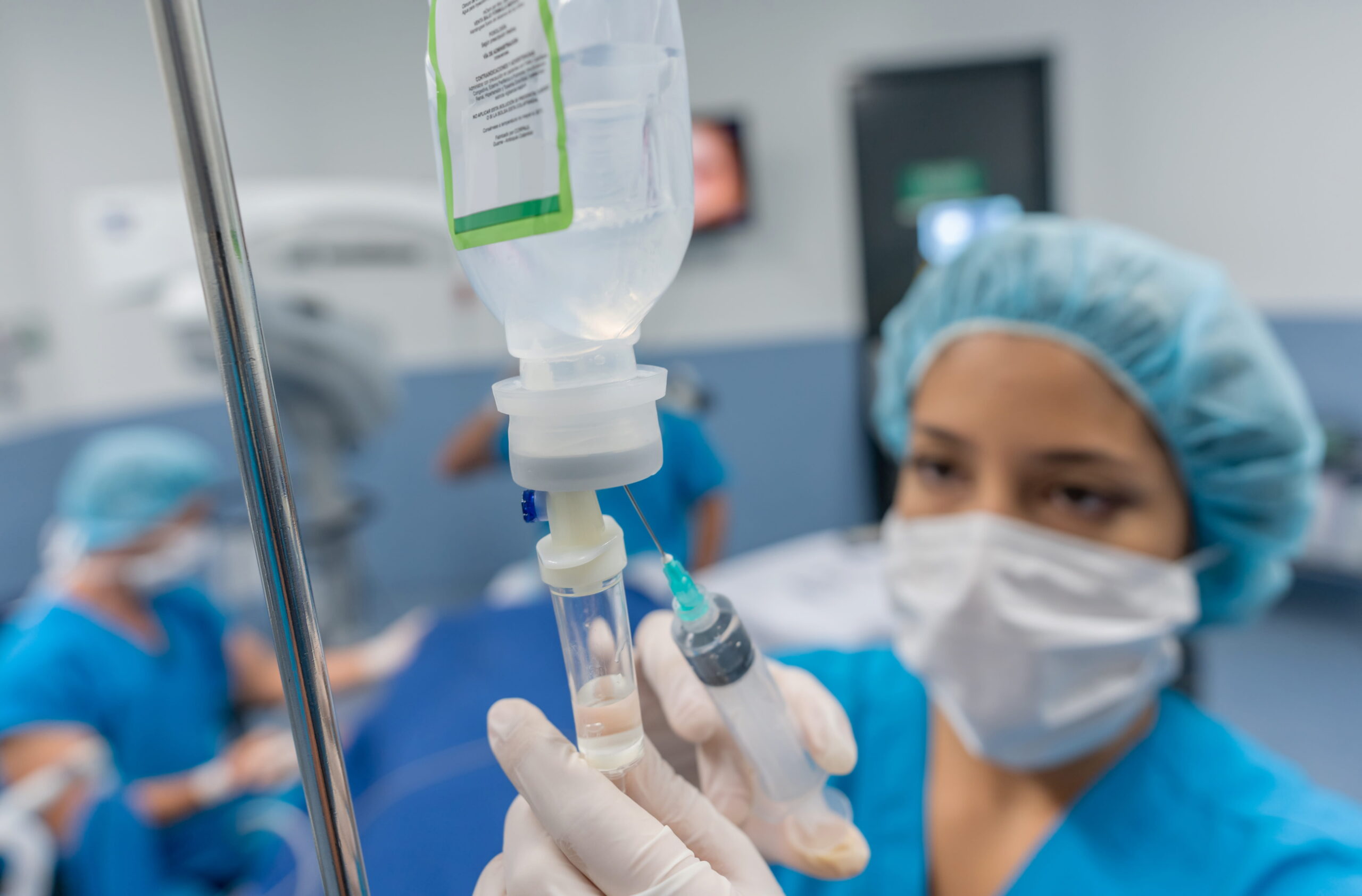
A certified registered nurse anesthetist is an advanced practice registered nurse (APRN) who specializes in anesthesia care. They are responsible for:
- Administering anesthesia
- Monitoring patients before, during, and after surgical or procedural interventions
- Managing pain and sedation across a wide range of clinical settings
CRNAs may work in:
- Operating rooms
- Labor and delivery units
- Outpatient surgery centers
- Pain management clinics
- Emergency departments
What sets CRNAs apart from many other healthcare roles is their level of autonomy. In many states, CRNAs practice independently without physician supervision, which makes them essential providers in rural and underserved communities where anesthesiologist coverage is limited or unavailable. According to the American Association of Nurse Anesthesiology, CRNAs are the primary anesthesia providers in most rural hospitals across the United States. That clinical scope and responsibility is a key reason the compensation reflects what it does.
How Much Do CRNAs Make?
When nurses ask, “How much does a nurse anesthetist make in a year?” the answer is straightforward: substantially more than most other nursing roles.
According to 2024 data from the United States Bureau of Labor Statistics (BLS), the median annual salary for nurse anesthetists is $223,210. Compare that to the median RN salary of $93,600, and the earning differential is clear. Even measured against the national median wage of $49,500 (as of 2024) and mean of $69,770 across all occupations (as of 2025), this average CRNA salary reflects a career-defining financial advantage.
For nurses who have spent years developing clinical expertise, that gap represents the return on a sustained investment in education and experience.
CRNA Starting Salary
Even at the entry level, the CRNA starting salary is well above what most other nursing specialties pay at any career stage. New CRNA graduates may enter the field earning up to about $180,000 annually, depending greatly on geography, work setting, and employer. That figure grows substantially with experience, specialization, and the type of practice arrangement a CRNA pursues. For nurses considering the long-term return on a doctoral-level degree, the starting point alone makes the investment worth examining.
CRNA Salary by State
Geography is one of the most significant drivers of CRNA compensation. According to 2023 BLS data, the top-paying states for nurse anesthetists (based on mean annual wage) included:
- Illinois – $281,240
- Massachusetts – $272,510
- Montana – $256,460
- New York – $256,160
- Vermont – $254,790
On the lower end of the spectrum, states like Utah report more modest figures, though even those salaries remain well above the national nursing average. In addition, it’s worth noting that rural areas in many states offer signing bonuses, loan repayment incentives, and premium pay rates to attract CRNA coverage where provider shortages are most acute.
CRNA Salary by Work Setting
Where a CRNA works also affects what they earn. Namely:
- Outpatient care centers offer the highest average wages, around $264,000 annually.
- General medical and surgical hospitals, specialty hospitals, and physician practices round out the common employment settings, each with slightly different compensation structures.
- CRNAs who work in high-acuity or high-volume environments tend to command stronger compensation than those in lower-intensity outpatient settings.
Factors That Influence CRNA Earning Potential
The headline salary figures tell part of the story, but several factors shape what an individual CRNA actually earns over the course of a career:
- Years of experience have a direct effect on compensation. CRNAs who enter the field earning around $180,000, for instance, typically see meaningful salary growth within the first few years as they build clinical volume and institutional familiarity.
- Scope of practice laws vary significantly by state. States that allow independent CRNA practice — without a requirement for physician supervision — tend to offer stronger compensation packages because CRNAs in those states carry full billing and accountability authority.
- Subspecialty focus is another lever. CRNAs who develop expertise in neuroanesthesia, pediatric anesthesia, cardiac cases, or regional anesthesia techniques generally command premium rates over generalist practitioners.
- Work structure matters, too. Locum tenens arrangements (where a CRNA works short-term contracts across multiple facilities) can offer higher per-hour rates than permanent staff positions, though with trade-offs in schedule stability and benefits continuity.
- Bonuses and total compensation are the final part of the picture. Many CRNA roles include performance bonuses, call pay, and benefits packages, health coverage, retirement contributions, and continuing education allowances that add meaningful value beyond the base salary figure.
Job Outlook for Nurse Anesthetists
The financial case for pursuing a CRNA career is reinforced by the employment picture. The BLS projects 35% employment growth from 2024 to 2034 for the advanced practice registered nurse category, a rate far above the average for all occupations. That growth is driven by an aging U.S. population requiring more surgical and procedural care, combined with persistent shortages of anesthesia providers in both urban and rural settings. For nurses making long-term career decisions, that projection points to sustained demand and a solid negotiating position for years ahead.
The BSN-to-CRNA Pathway: What You Need to Know
Understanding generally how much CRNAs make is one thing; having a grasp of what it takes to get there is another. The path from working RN to licensed CRNA follows a clear sequence, and knowing each step helps you plan realistically.
Step 1: Earn Your BSN
The BSN is the non-negotiable first credential for CRNA program admission. No doctoral-level nurse anesthesia program will consider an applicant who holds only an associate degree in nursing (ADN). But the BSN matters beyond admissions requirements: It builds research literacy, leadership foundations, and systems-level clinical thinking, which are precisely the competencies that doctoral-level anesthesia programs build upon.
Nevada State University’s RN to BSN online program is tailored specifically to licensed RNs who want to complete their bachelor’s degree while continuing to work. The program is fully online, competency-based, and structured to help nurses move efficiently through this essential first milestone.
Step 2: Gain ICU Experience
Most CRNA programs require a minimum of one to two years of acute or critical care nursing experience, with intensive care unit (ICU) experience highly preferred. CRNA programs expect applicants to arrive already competent in managing hemodynamically unstable patients, interpreting complex monitoring data, and making rapid clinical decisions under pressure, and the ICU is where nurses develop that foundational proficiency. The more focused and high-acuity the experience, the stronger the application.
Step 3: Complete a Doctoral-Level Nurse Anesthesia Program
As of 2025, all new CRNAs are required to hold a doctoral degree, either a Doctor of Nursing Practice (DNP) or a Doctor of Nurse Anesthesia Practice (DNAP). This mandate was established by the Council on Accreditation of Nurse Anesthesia Educational Programs (COA) to align entry-level preparation with the clinical complexity of the role.
These programs are rigorous by design. Most take approximately three years to complete on a full-time basis and require a minimum of 2,500 supervised clinical hours. Coursework covers:
- Advanced pharmacology
- Physiology
- Pathophysiology
- Airway management
- Regional anesthesia techniques
- Anesthesia for specialty populations (e.g., pediatric, obstetric, and cardiac patients)
Step 4: Pass the National Certification Examination
After completing an accredited nurse anesthesia program, graduates must pass the National Certification Examination (NCE), administered by the National Board of Certification and Recertification for Nurse Anesthetists (NBCRNA). State licensure requirements vary, but most states require the following as the baseline for practice authorization:
- Proof of national certification
- An active RN license
- A background check
Total Time to Become a CRNA
From BSN completion through doctoral program graduation, the total time investment is typically seven to eight and a half years — accounting for the BSN, required ICU experience, and the doctoral program itself. An accelerated RN to BSN program like NSU’s shortens the time it takes to clear that first milestone, meaning that nurses who start sooner reach the CRNA pathway sooner.
Start the Career That Pays What Your Skills Are Worth
CRNAs represent one of the most respected, well-compensated roles in all of healthcare. With an average annual salary of $223,210, a CRNA starting salary of up to $180,000 (or more), and a 35% projected employment growth rate over the next decade, the data makes a clear case for pursuing this path. Every nurse who reaches that credential starts in the same place: the BSN.
If you’re a working RN ready to take that first step, Nevada State University’s RN to BSN online program offers the flexibility and academic rigor to help you get there without putting your career on hold. Request more information about our RN to BSN program today and find out how soon you can start progressing toward the career and compensation to which you aspire.
Sources
https://www.aana.com/about-us/about-crnas/become-a-crna/
https://www.nbcrna.com/
https://www.bls.gov/ooh/healthcare/nurse-anesthetists-nurse-midwives-and-nurse-practitioners.htm
https://www.bls.gov/ooh/healthcare/registered-nurses.htm#tab-5
https://www.bls.gov/news.release/ocwage.t01.htm
https://www.bls.gov/ooh/healthcare/
https://www.bls.gov/oes/2023/may/oes291151.htm
https://www.coacrna.org/wp-content/uploads/2025/08/Standards-for-Accreditation-of-Nurse-Anesthesia-Programs-Practice-Doctorate-May-2025-Effective-Date-January-2026-1.pdf
https://research.com/degrees/how-to-transition-from-bsn-to-crna-length-education-and-training-requirements